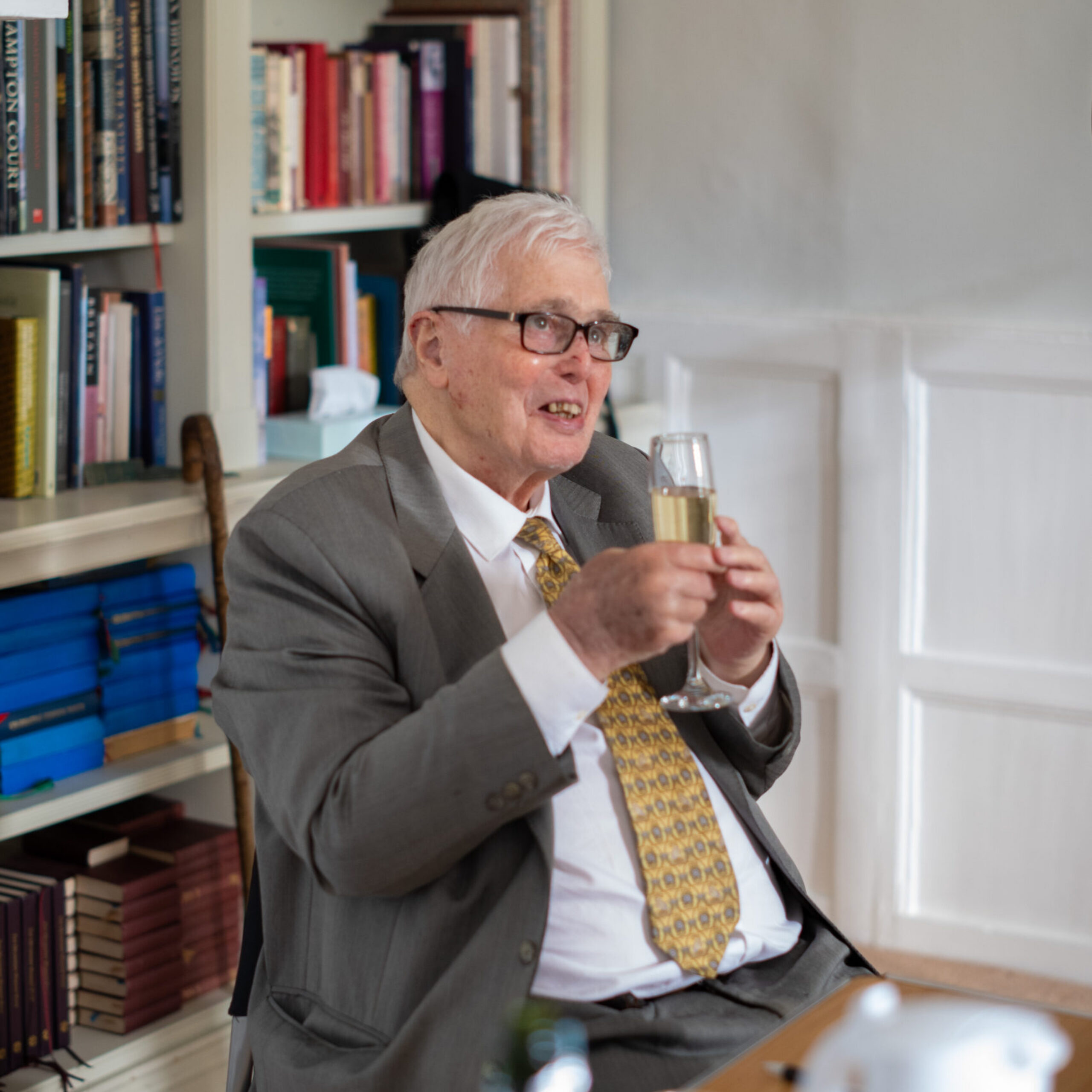






Harry Wakefield Bramma, 11 November 1936 to 24 August 2026

RSCM Director, 1989–1998
Harry Bramma, who died on 24 August 2026, was one of the most distinctive figures in English church music of the second half of the 20th century. Organist, conductor, teacher, writer, composer and fundraiser, he was Director of the RSCM from 1989 to 1998, a period of considerable financial and cultural change for the organisation.
His funeral service will take place in Southwark Cathedral at 2.00pm on Thursday 8th October.
Born in Shipley, Yorkshire, on 11 November 1936, and educated at Bradford Grammar School and Oxford University, Harry first made his name as a schoolmaster in Worcester, Assistant Organist at Worcester Cathedral and, from 1976, Director of Music at Southwark Cathedral. When he arrived at Southwark, the music was at a low ebb, and he set about rebuilding the choir through an ambitious recruitment campaign. Within a few years, the choir had appeared on BBC Radio 3’s Choral Evensong.
In 1989 Harry became Director of the RSCM, initially with some reluctance. He had been unsure about leaving the immediate pleasures of playing the organ and directing a choir but soon established himself as a highly hands-on Director. He travelled extensively around the British Isles, giving talks, conducting courses and events and meeting members. He also visited Australia, New Zealand and the USA, recognising the importance of maintaining the RSCM’s international relationships.
He arrived at a particularly difficult moment. The lease on the RSCM’s headquarters at Addington Palace was due to expire in 1993, while the organisation faced financial pressures and questions about its identity in a changing Church. Harry responded by launching the ‘Sing with a Spirit’ Appeal, raising the funds needed for a new headquarters and enabling the RSCM to expand its training, educational resources and musical support. The eventual move to Cleveland Lodge, Box Hill, in 1996 was achieved without the financial catastrophe that had seemed possible.
Harry’s ambitions went beyond securing the RSCM’s finances. He wanted it to become relevant to a much wider Church. In CMQ he challenged the perception that the RSCM was concerned only with traditional Anglican choirs, large churches, organs and choral evensong. He maintained the importance of the English choral tradition and high standards, while embracing different musical styles and the changing needs of the Church.
He was particularly proud of his work with Evangelical churches, many of which had previously felt that the RSCM had little to offer them. He attended gatherings outside his immediate comfort zone and developed relationships across theological and musical traditions.
At the heart of Harry’s understanding of church music was worship. His theological training and Christian faith informed his writing, in which he repeatedly returned to music’s role in preparing the heart, expressing emotion and enabling people to offer their creativity to God. He was particularly concerned that young people should have the opportunity to sing, believing that choir membership could bring spiritual awakening. He wrote of the responsibility to ‘discover the divine within the child’.
Harry was also a gifted and prolific writer. He hand-wrote his letters and produced substantial Director’s Letters and articles for CMQ, tackling subjects including girls’ choirs, silence in worship, the proper remuneration of church musicians and pipe versus electronic organs. His autobiography, Not Half Bad, was published in 2025, and those who knew him recognised in its pages the real Harry: honest, humorous, enthusiastic and without ‘airs and graces’.
Alongside his RSCM work, Harry remained an active musician. In 1989 he became Director of Music at All Saints, Margaret Street, serving concurrently with his RSCM post. He won the respect and affection of its adult choir, clergy and congregation, and helped mastermind the rebuilding of the 1910 Harrison & Harrison organ, as well as helping to raise the funds for it. On hearing the completed instrument, Harry remarked, ‘It sounds like a million dollars.’ The Vicar replied: ‘Yes, Harry, so it should. That’s what it cost!’
Harry also raised funds for the T.C. Lewis organ at Southwark Cathedral and, in later years, turned to composition, producing several published anthems. His God of light continues to be sung each February at Southwark Cathedral and All Saints, Margaret Street. He held several prestigious positions, including the presidency of the Royal College of Organists, and was regarded as a leading authority on English church music and organs.
Despite his achievements, Harry never acquired ‘airs and graces’. If he believed something needed changing, he said so, ‘no beating about the bush’. His enthusiasm was infectious, with ‘wonderful’, ‘outstanding’ and ‘terrific’ among his favourite descriptions, usually accompanied by raised eyebrows and a twinkle in the eye.
Harry retired from the RSCM in 1998, having changed its image, strengthened its international relationships, broadened its appeal and secured its financial future.
His later years were spent in Chislehurst. Even as his health declined, he remained characteristically positive about those around him. He had begun to become more active again and hoped to resume occasional Sunday deputising at Beckenham Methodist Church, whose ‘no fuss’ services he particularly enjoyed.
Harry never married, but leaves friends, colleagues and former pupils across the world whose lives were enriched by his generosity, encouragement and example. His influence lives on in the choirs he inspired, the musicians he taught, the institutions he strengthened, the music he wrote and the words he left behind. Those who knew him will perhaps hear, in the Yorkshire accent they remember so well, the verdict that would have amused him most: ‘Harry – not half bad’.
‘Rest in peace, Harry, and so much love and thanks. We wouldn’t have had you any other way’, Paul Brough.
‘A formidable intellect, generous, encouraging and sociable. Thank you, Harry – you were better than “not ‘alf bad”.’ Nicholas Cleobury.